




Knowledge of foreign languages allows Kazakhstani scientists to integrate into global scientific movements.
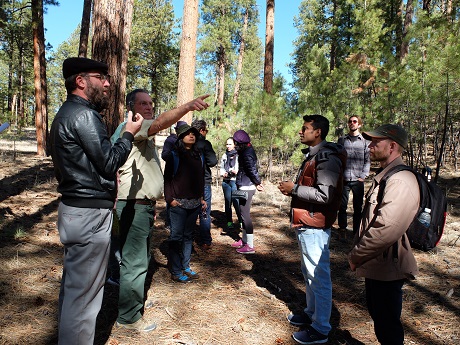
From 4 to 25 March 2017, at the invitation of the US Department of State, Candidate of Biological Sciences, Associate Professor of the Department of Agrotechnology Kamkin Victor Alexandrovich visited the United States of America upon IVLP (International Visit Leadership Program) program. The theme of IVLP 2017 for southern and central Asia was "Adaptation and mitigation of local effects of climate change". Together with Kamkin V.A., scientists, ecologists, public and political figures from Uzbekistan, Tajikistan, Pakistan, India and Sri Lanka took part in the program. The program included visits to five states and eight US cities most affected by the effects of climate change: Washington (District of Columbia), Baltimore and Ellicott (Maryland), San Diego (California), Santa Fe and Albuquerque (New Mexico), Kansas City (Texas) and Norfolk (Virginia).
In Washington, issues of public administration of environmental, agricultural and energy issues, as well as historical prerequisites for US federalism were considered. Much attention was paid to planting and improvements the city and protecting green spaces from diseases and illegal logging.
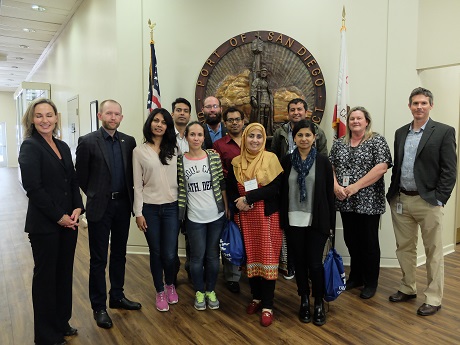
In San Diego, the participants of the program had an opportunity to get acquainted with the organization and work of non-governmental non-commercial organization dealing with the questions of environmental well-being of the urban environment. It is interesting that in the United States, citywide clean-up events are also held annually, in which a large number of volunteers take part. For electrification of the homes of poor citizens of San Diego, student construction brigades have been created, which, under the guidance of experienced specialists, install and connect solar batteries on the roofs of houses.
Climate change is the harsh reality of the 21st century, leading to an infraction of the way of life that has been established over the centuries, the economy, agriculture and even the possibility of people living in many territories. In the coming decades, climate change will cause an increase of migration phenomena and the struggle for living resources. Only by joint efforts of all states this process can be slowed down. Therefore, as long as there is an opportunity to prevent a global catastrophe, humanity must unite in solving a common problem.
 OpenU
OpenU 