




Archaeologists from Toraighyrov University, in collaboration with Russian anthropologists, conducted an interdisciplinary study of the Zhartas necropolis, located in the Ekibastuz district near the village of Shiderty. The results of this scientific work have been published in the Moldovan journal Stratum Plus.
During the study, scientists established that the individual buried in the Zhartas burial ground was a woman aged 45–55 who lived during the Late Bronze Age, nearly 3,500 years ago.
According to the anthropological analysis, the woman belonged to the Caucasoid dolichocranic craniological type, and based on the structure of her postcranial skeleton, she fit the steppe morphotype of the Bronze Age population. Such features are characteristic of populations from the western part of the Eurasian steppes.
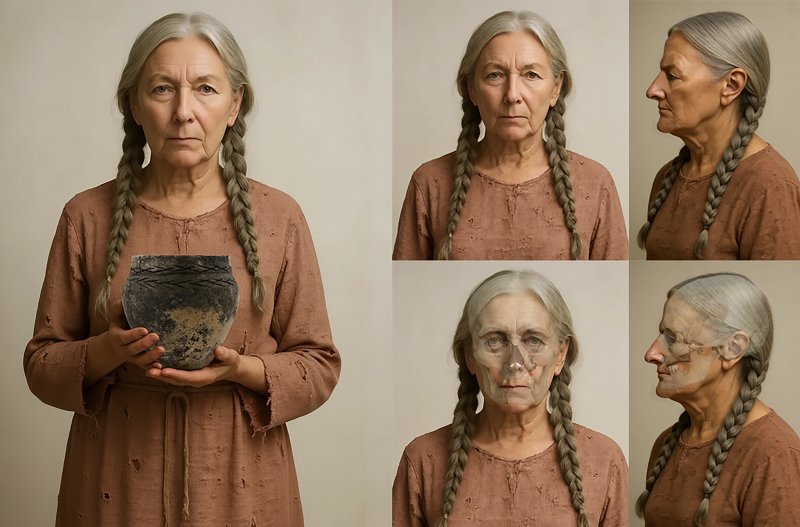
Researchers note that the woman from Zhartas shares similarities with representatives of other sites from the final stage of the Bronze Age in Kazakhstan. Of particular interest is the graphic reconstruction of her appearance, performed based on her skull. Thanks to modern anthropological methods, it is now possible to see the presumed likeness of the population of the Sargarin-Alekseev culture from the northeastern part of the Kazakh Uplands.
Based on radiocarbon and isotope analyses, as well as modern understanding of the chronology of the "valikovaya" (ridged pottery) complexes of the Eurasian steppe zone, the studied burial dates back to the middle of the 2nd millennium BC—approximately 1506–1446 BC.
This study serves as further confirmation that modern scientific technologies allow history to be literally brought to life, opening new chapters of Kazakhstan's past.
 OpenU
OpenU 